

You finish the last pane, step back, and the streaks appear the moment the sun comes round. Most of that comes down to water and technique, not effort, and window cleaning is work our own cleaners carry out on homes and commercial premises across the area we serve.
The Short Version
- The warm water, washing-up liquid and squeegee method that dries clear
- Why upstairs glass belongs to an inside reach or a water-fed pole
- The everyday habits that leave streaks, lint and scratched uPVC frames
- What white spots, greasy smears and misted units each tell you
- How to treat leaded and textured glass without a squeegee
- Where a sensible DIY job ends and pole-fed work begins
We have worked across the area since 1966, so routine window cleaning and window cleaning in Hemel Hempstead both come from the same family firm, now in its fourth generation.
Request a free quote from Olivers Cleaning Contractors Ltd for window cleaning across the area we serve, and have the right method settled before winter grime builds up.

What is the best way to clean windows in the UK?
The best way to clean windows in the UK is to wash the glass with warm water and a little washing-up liquid, dry it with a rubber-blade squeegee, and buff the edges with a lint-free microfibre cloth on an overcast day. Upstairs, clean from inside or use a water-fed pole, never an overstretched ladder.
Ask Olivers Cleaning Contractors Ltd for a free window cleaning quote, site survey included: we don't cut corners, we clean them.
The safety rules that come first
Most window cleaning injuries happen on ladders, not at the glass. UK work-at-height guidance sets a clear order: avoid working at height where you can, and where you cannot, use equipment that keeps you on the ground. For a house, that means a few firm rules.
- Clean from inside where the window allows it. Tilt-and-turn and many uPVC casements open inwards or pivot, so the outer pane can be reached from the room.
- Use a telescopic water-fed pole for upper floors. Your feet stay on the drive or lawn while the pole reaches first and second storey glass.
- If a ladder is unavoidable, keep it short and footed. Firm, level ground, someone holding it, and no leaning past the stiles.
- Never stand on a sill, chair or conservatory roof. None of them is built to take your weight.
- Keep water away from outdoor sockets, lights and overhead cables, especially with a metal or carbon pole.
- Never mix chemicals. Bleach with vinegar or with an ammonia glass cleaner gives off harmful fumes. Wear gloves with anything stronger than washing-up liquid.
Our cleaners are trained to COSHH Health and Safety Regulations, which covers that last point: knowing what is in a product and how it should be used.
Habits that cause streaks and damage
Most streaky windows come from good intentions. These are the habits that undo the work most often.
- Cleaning in direct sunlight. The sun dries the solution before you can remove it. An overcast day, or the shaded side of the house, gives you time.
- Too much detergent. A few drops of washing-up liquid in a bucket of warm water is plenty. More leaves a film that attracts dirt.
- Believing a squeegee makes things worse. A clean rubber blade, pulled in overlapping strokes and wiped after each pass, is a reliable route to streak-free windows. Trouble comes from a nicked or dirty blade, not the tool.
- Drying with kitchen roll or newspaper. Both leave lint, and newsprint can mark pale frames. Finish with a lint-free microfibre cloth.
- Scourers and abrasive creams. They scratch glass and dull uPVC window frames. Soapy water and a soft cloth are enough for uPVC; keep solvents off it.
- Finishing with hard tap water. In hard-water areas it dries to white spots. A last wipe with distilled water, or a pure water pole, prevents them.
- Following advice written for other countries. Many guides assume removable window screens and imported glass cleaner. Most British homes have neither, so the routine is simpler.
What the glass tells you about its condition
Look at each window from an angle, with light behind it, before you start. What you see decides the method.
- Dust and pollen: a routine wash and squeegee.
- White spots or crust near the bottom: hard-water stains and limescale. Equal parts white vinegar and warm water, left for a few minutes, loosens most; persistent limescale may take several goes. Keep vinegar off natural stone sills.
- Greasy smears inside: cooking residue or fingerprints. A little rubbing alcohol (isopropyl) on microfibre cuts through it.
- Bird droppings: soak with warm water until soft. Scraping dry grit across glass scratches it.
- Paint specks: a fresh blade held flat on wet, plain glass. Avoid this on coated or toughened glass.
- Mist between the panes: the double-glazed unit has lost its seal. No cleaning can reach it.
- Condensation on the inside face: a ventilation problem, not dirt. Wipe, dry the frame and air the room, or mould follows on the seals.
- Green or black on frames: algae or mould. Soapy water and a soft brush, then rinse.
Leaded and textured glass need a lighter touch. A soft brush works soapy water into the pattern, and because a squeegee cannot seal against an uneven surface, dry it with microfibre instead. We carry out window cleaning on homes and commercial premises across the whole area, window cleaning in St Albans included.
Ask Olivers Cleaning Contractors Ltd for a free window cleaning quote, site survey included: we don't cut corners, we clean them.
What you can do yourself and what needs a professional
Ground floor glass is a reasonable job to do yourself. A sound routine:
- Brush loose dirt and cobwebs off frames and sills.
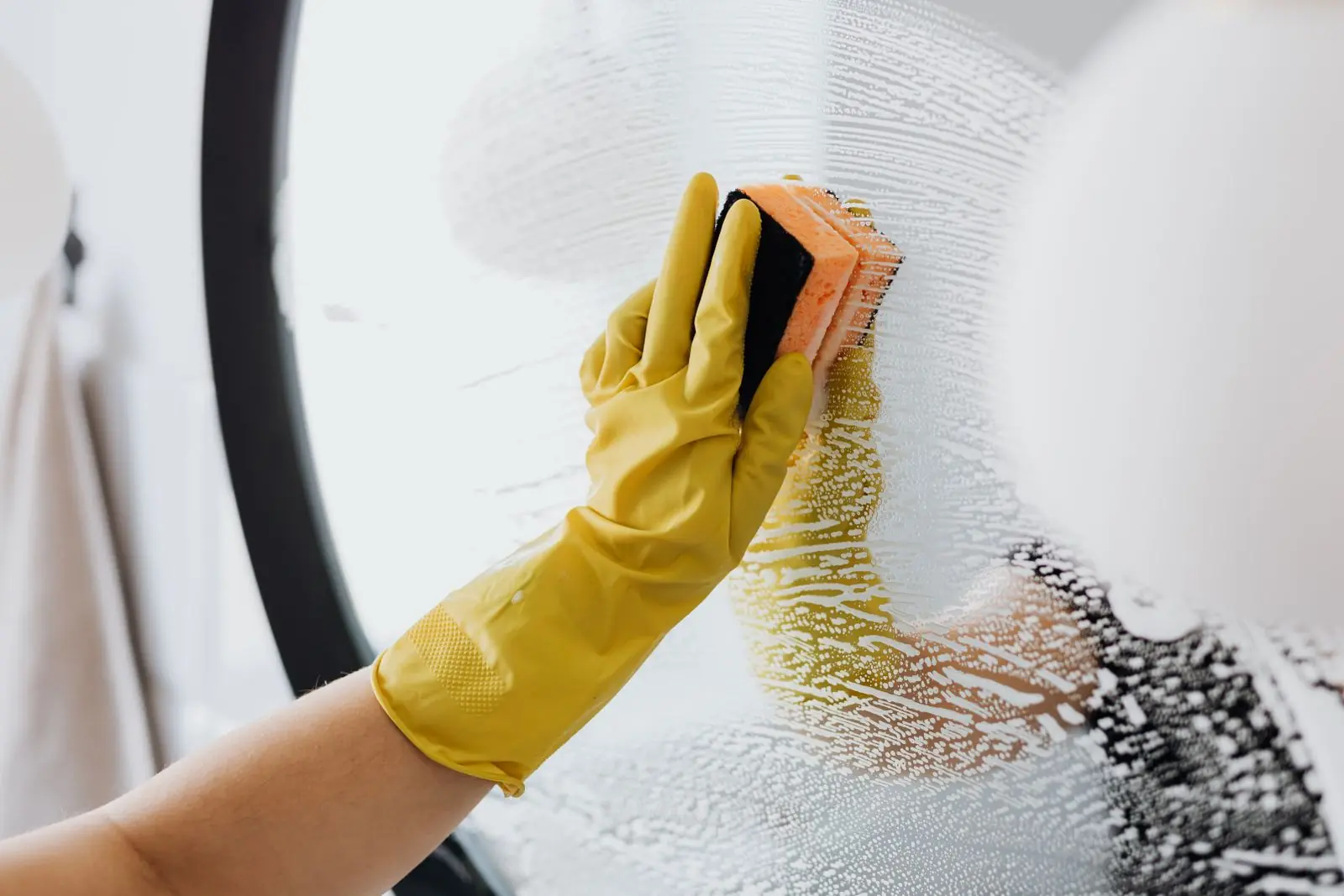
- Wash the glass with warm soapy water, using a strip washer or sponge.
- Squeegee top to bottom, or across in an S pattern, wiping the blade each stroke.
- Finish edges and corners with a lint-free cloth.
- Wipe frames and sills last, so drips do not undo them.
The inside of upstairs windows, and any outer pane you can reach safely from within, sit in the same category.
Stop where the glass means a ladder above ground floor, leaning out of a window, or working near a conservatory roof, skylight or commercial glazing. We use conventional methods where they suit the window and the Reach & Wash system for height: a water-fed pole delivering purified water, so glass dries clear without detergent or wiping. Every job starts with a site survey, because access, frame material and glass type all change the method. If you want a window cleaner close to home, our cleaners live locally to the sites they serve, and window cleaning in Watford is handled by the same team of our own employees.
Ask Olivers Cleaning Contractors Ltd for a free window cleaning quote, site survey included: we don't cut corners, we clean them.